Showing posts with label Space pictures. Show all posts

Picture Of The Day Feb - 5

Picture Of The Day


      2013, February, 5


(Hubble Infrared Image of Area Surrounding Hanny's Voorwerp)

Posted by Unknown | at 19:54 | 0 comments

Picture of The Day Jan -22

Picture Of The Day


2013, January, 22


(Light Echo From Star V838 Monocerotis )

Posted by Unknown | at 22:02 | 0 comments

Picture Of The Day Jan - 5

Picture Of The Day


     2013, January, 5


(Three Moons Cast Shadows on Jupiter)

Posted by Unknown | at 02:01 | 0 comments

Picture Of The Day Dec - 29

Picture Of The Day


   2012, December, 29


(Visible-Light Image of Jupiter -- Hubble Space Telescope)

Posted by Unknown | at 00:13 | 0 comments

Picture Of the Day , Dec - 28

Picture Of The Day


    2012, December, 28


(M17 The Omega, Swan, or Horseshoe Nebula )

Posted by Unknown | at 03:22 | 0 comments

Picture Of The Day , Dec-25

Picture Of The Day


 2012, December, 25


           (Halley's Comet in 1986)

Posted by Unknown | at 21:17 | 0 comments

Picture Of The Day , Dec - 24

Picture Of The Day


     2012, December, 24


(Galaxy Cluster MACS J0647)

Posted by Unknown | at 22:36 | 0 comments

Picture Of The Day Dec - 23

Picture Of The Day


   2012, December, 23


(Close Up of Ancient, White Dwarf Stars in the Milky Way Galaxy)

Posted by Unknown | at 20:50 | 0 comments

Picture Of The Day Dec-20

Picture Of The Day


  2012,December,20


(HST PHAT Wide Image of M31)

Posted by Unknown | at 02:56 | 0 comments

Top 10 Biggest Things In The Universe

Top 10 Biggest Things In The Universe


          1. The Cosmic Web:

 
                                  Most astronomers agree that the biggest thing in the universe is the cosmic web. It’s an endless scaffolding of clusters and superclusters of galaxies surrounded by dark matter and resembles a three dimensional spiderweb. Clusters of galaxies and dark matter make up “hubs” and filaments of galaxies connect these hubs producing a web like appearance


        2. Shapley  Super Cluster :


                                      It is the most massive gravitationally bound object that we currently know of. The Shapley Supercluster is a collection of galaxies some 400+ million light years long. This puts our Milky Way galaxy around 4,000 times smaller


       3.  Boötes void :


                                The Boötes void or the Great Void is a huge and approximately spherically shaped region of space, containing very few galaxies. It is located in the vicinity of the constellation Boötes, hence its name. Its center is located at approximately right ascension 14h 20m and declination 26°


        4. Lyman Alpha Blobs:


                                In astronomy, a Lyman-alpha blob (LAB) is a huge concentration of a gas emitting the Lyman-alpha emission line. LABs are some of the largest known individual objects in the Universe. Some of these gaseous structures are more than 400,000 light years across. So far they have only been found in the high-redshift universe because of the ultraviolet nature of the Lyman-alpha emission line. Since the Earth's atmosphere is very effective at filtering out UV photons, the Lyman-alpha photons must be redshifted in order to be transmitted through the atmosphere. 


         5. Radio Lobes :


                                    Radio lobes are powered by the accretion disk of super massive black holes. Black holes that sit at the center of most galaxies. As material gets consumed by a black hole, some energy and matter is flung away at high speeds which occur at the poles of black holes. These emissions are in the form of radio energy jets which can be seen with a radio telescope. The largest is located in the galaxy is 3C236 which is located in the constellation Leo minor. Its jets span 40 million light years across. The jets from end to end are by far larger than any galaxy.


        6. Largest Galaxy :


                                    The largest that we’ve discovered so far, is arguably the IC1101 super galaxy. It is 6 million light years across. Compare that to the Milky Way which is a mere 100 thousand light years across. IC1101 is a staggering 60 times larger than our own.


       7. Largest Black Hole:


                                   Black holes are not physically large regions of space. But when you include their mass, they are among the top competitors for the largest things in the universe. And quasar OJ287 is the largest black hole we’ve spotted. It’s estimated to be 18 billion times the mass of our sun and is a supermassive black hole located in the center of a galaxy.


     8. Largest Star:


                                    VY Canis Majoris is the largest star (in diameter) that we know of. It’s in a class of star known as Red Hyper Giants. It’s 2,000 times wider than the sun and would take the world’s fastest race car 2,600 years to circle it once. If you replaced our Sun with VY Canis Majoris, it’s radius would extend out beyond Saturn.


    9. Largest Planet:


                                   Jupiter is the largest planet in our Solar System, scientists have discovered a larger one in another Solar System in the constellation of Hercules. Discovered in 2006, the planet is known as TrES-4. Its diameter is 1.7 times that of Jupiter’s. Even though it is 70% larger than Jupiter is, the planet’s mass is only 75% of Jupiter’s mass


 10. Largest Asteriod:


                           Ceres is the largest asteroid we know of. It is almost 600 miles in diameter which makes it as large as California. It’s massive enough that its gravity forces it to have a spherical shape and also shares the title of ‘Dwarf Planet’. 


Posted by Unknown | at 02:53 | 0 comments

Picture Of The Day Dec - 18

Picture Of The Day


       2012,December,18


(Comet-like Asteroid P/2010 A2 by HST)

Posted by Unknown | at 04:19 | 0 comments

Picture Of The Day Dec-17

Picture Of The Day


  2012,December,17


(Spiral Galaxy NGC 3949: A Galaxy Similar to the Milky Way)

Posted by Unknown | at 01:42 | 0 comments

10 Satellites Of Milky way Galaxy

10 Satellites Of Milky way Galaxy


            1. Canis Major Dwarf
                                     The Canis Major Dwarf Galaxy is classified as an irregular galaxy. Located about 25,000 light-years away from our Solar System and 42,000 light-years from the Galactic Center.


         2.  Sagittarius Dwarf Elliptical Galaxy :
                                      The Sagittarius Dwarf Elliptical Galaxy (Sgr dE) is an elliptical loop-shaped satellite galaxy of the Milky Way Galaxy and is currently about 70,000 light-years from Earth, travelling in a polar orbit at a distance of about 50,000 light-years from the core of the Milky Way.


             3.  Ursa Major II Dwarf :
                                                Ursa Major II Dwarf (UMa II dSph) is a dwarf spheroidal galaxy


        4.  Large Magellanic Cloud :
                                          The Large Magellanic Cloud (LMC) is a nearby irregular galaxy, and a satellite of the Milky Way. 


         5.  Boötes Dwarf Galaxy :
                                           The Boötes Dwarf Galaxy (Boo I dSph) is a faint galaxy. It lies about 197 kilolight-years (60.4 kiloparsecs) away in the constellation Boötes


                6.   Small Magellanic Cloud :
                                            The Small Magellanic Cloud (SMC) is a dwarf galaxy. At a distance of about 200,000 light-years.


            7. Draco Dwarf :
                                   The Draco Dwarf is a spheroidal galaxy which was discovered by Albert George Wilson


                8. Carina Dwarf Spheroidal :
                                           The Carina Dwarf Spheroidal is a dwarf galaxy in the Carina constellation


               9.  Fornax Dwarf Spheroidal :
                                          The Fornax Dwarf Spheroidal is an elliptical dwarf galaxy in the constellation Fornax


                 10.  Barnard's Galaxy :
                                    NGC 6822 (also known as Barnard's Galaxy, IC 4895, or Caldwell 57) is a barred irregular galaxy approximately 1.6 million light-years away in the constellation Sagittarius.


Posted by Unknown | at 01:37 | 10 comments

Picture Of The Day Dec-14

Picture Of The Day


2012,December,14


(A Speeding Star is Caught on Hubble's Camera)

Posted by Unknown | at 22:49 | 0 comments

Picture Of The Day Dec-13

Picture Of The Day 


2012,December,13


(3200 Phaethon - cause of Geminid Meteor Shower)
 

Posted by Unknown | at 19:06 | 0 comments

Picture Of The Day Dec-12

Picture Of The Day


2012,December,12


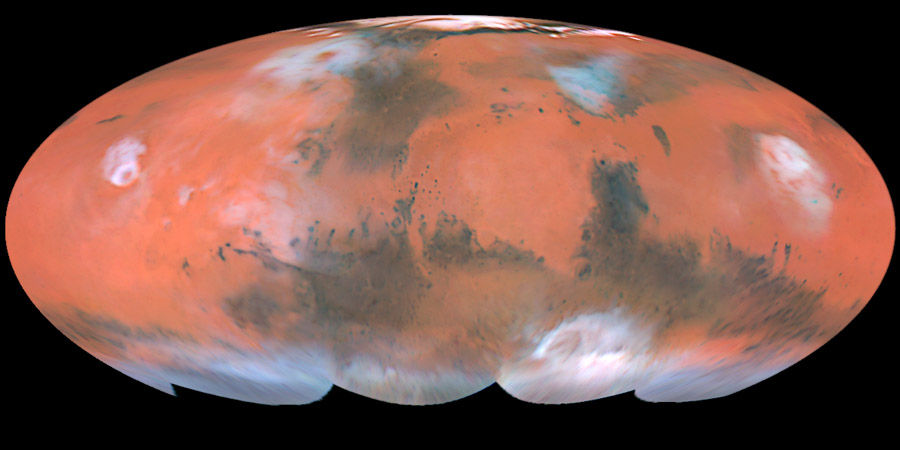
(A Global Mars Map)

Posted by Unknown | at 22:31 | 0 comments

Picture Of The Day Dec-10

Picture Of The Day


2012,December,10


(X-Rays Shine From Heated Material Falling Into A Black Hole)

Posted by Unknown | at 23:17 | 0 comments

Picture Of The Day Dec-9

Picture Of The Day


2012,December,9


(Hubble Catches Titan Chasing Its Shadow)

Posted by Unknown | at 21:03 | 0 comments

Largest moons

12 Largest moons


Ganymede (Jupiter)


 Titan (Saturn)


Callisto(Jupiter)


Io (Jupiter)


 Moon (Earth)


Europa (Jupiter)


Triton (Neptune)


Titania (Uranus)


Rhea  (Saturn)


Oberon (Uranus)


Iapetus (Saturn)


 Charon (Pluto)

Posted by Unknown | at 20:58 | 1 comments